P4Z-0hy22ZRyqh5IUeLwjcY3L_M

MEAN STREETS MEDIA
Wednesday, June 26, 2013


Iran ( Beaten and tortured inmate Arash Sadeghi has not been seen in " Over a year " ) The prison will not prove he is alive ?
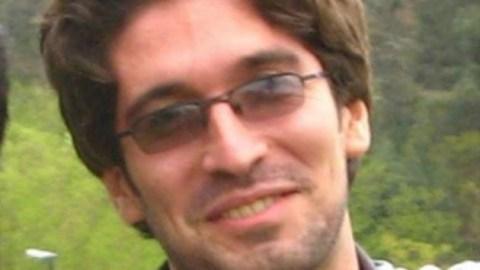
Arash Sadeghi was a sixth-term graduate student of philosophy at Allameh Tabatabaee University, a member of the Islamic Association of the university, and a member of Mir Hossein Mousavi’s election campaign in the 2009 presidential election when he was arrested on July 9, 2009, following street protests.
“Through the follow-ups I have made, I am sure that he is alive and the rumors circulating about him are not true,” Mahmoud Alizadeh Tababaee, the political prisoner’s former lawyer, told the Campaign. Regarding questions of beatings by prison officials, the reasons why Sadeghi has not been transferred to the general ward, and whether his family has been able to visit with him, Tababaee said, “I cannot answer these questions. We were very concerned about whether Arash is alive or not, and I have been assured over the past days that he is alive.”
This week, 200 political activists published a letter addressed to Ahmed Shaheed, the UN Special Rapporteur for Human Rights in Iran, protesting Arash Sadeghi’s conditions and the absolute lack of news about him. The letter states that Arash Sadeghi has been on a hunger strike inside Ward 209 of Evin in protest of being beaten by forces, and that his psychological and physical health are unknown. Following this letter, rumors have been circulating about whether or not Sadeghi is alive.
Mahmoud Alizadeh Tabatabaee, Arash Sadeghi’s former lawyer who has reassumed his case by request of Sadeghi’s father, refused to respond to questions about the reasons he may have been beaten and about his psychological and physical state, or whether he had been able to visit with him. He only said about Sadeghi’s case, “With the follow-ups I have had over the past days, I believe that there will be a indictment issued and sent to court for his new case.”
Arash Sadeghi was a sixth-term graduate student of philosophy at Allameh Tabatabaee University, a member of the Islamic Association of the university, and a member of Mir Hossein Mousavi’s election campaign in the 2009 presidential election when he was arrested on July 9, 2009, following street protests. He was released in late August 2009 without being informed of his charges. Sadeghi resumed his education at Allameh Tabatabaee University that September but was arrested again in December 2009 and released again in March 2010, again without being informed of his charges. He was arrested a third time in June 2010, and released in August 2010. After this third release, his lawyer Mahmoud Alizadeh Tabatabaee informed him that Branch 26 of Tehran Revolutionary Court under Judge Pirabassi had sentenced him to six years in prison on charges of “propaganda against the regime” and “assembly and collusion with intent to act against national security.”
Intelligence forces raided Arash Sadeghi’s home at 4 a.m. on October 30, 2010, in order to arrest him. Sadeghi’s mother suffered a heart attack with the shock of the raid and passed away. Arash Sadeghi, who was not home that day, turned himself in at Evin Prison on December 21, 2010. He was immediately transferred to Ward 209 of Evin Prison and subjected to torture by Intelligence forces coercing him to sign a letter denying any relation between his mother’s death and the raid by security forces.
Peyman Aref, a former prisoner of conscience who was Arash Sadeghi’s cellmate for some time, told the Campaign, “Arash was so harshly tortured inside Ward 209 of Evin Prison for signing that letter of denial that his right shoulder broke. When he was transferred to the General Ward, the ward physician ordered 10 physical therapy sessions for him. I was a witness to all of this. Arash was so severely tortured that he was no longer able to lift his right arm. A year after his arrest and almost a month before his release, he was informed of his case process, learning that the appeals court had reduced his sentence from six years to five years, only one year of which was to be served in prison. Therefore he was released on December 15, 2011.”
But Arash Sadeghi was arrested again on January 15, 2012, and has been inside Ward 209 of Evin Prison ever since without having been informed of his new charges.
Asked whether Arash Sadeghi had any political activities during the short time he was released, Peyman Aref said, “I saw Arash twice during that time. He was so depressed and sad, he was unable to do anything. Think about it, he had gone to prison with his mother’s death, and when he came back his family held him responsible for his mother’s death. He was severely depressed. I know that during that time he once went to Allameh University to follow up with his educational affairs, but he was told that he was no longer able to continue his education. So far as I know, his interrogator had called him once and, swearing at him, had accused him of planning to disrupt Allameh University ahead of the Council of Experts elections, and of planning to boycott the elections. He was arrested two days later on the street corner near his grandfather’s home.”
“Since then, nobody has seen him inside the General Ward nor in any of the public rooms of Ward 209. This means that he has been kept inside a solitary cell since his arrest and nobody knows about his health or whether he is alive. In all the past 1.5 years, he has only had two visits with his grandfather. Nobody has any information about him,” Aref added.
Mexico City ( Walls Won’t Stop Migration, Mexico Tells U.S. )
 MEXICO CITY – “Walls
won’t stop migration,” the Mexican government said Tuesday with reference to a
Republican amendment to comprehensive immigration reform that calls for stronger
border security.
MEXICO CITY – “Walls
won’t stop migration,” the Mexican government said Tuesday with reference to a
Republican amendment to comprehensive immigration reform that calls for stronger
border security.“We’re convinced that walls do not unite, they won’t stop migration, and they’re not consistent with a modern, secure border,” Mexican Foreign Secretary Jose Antonio Meade told reporters.
The U.S. Senate passed on Tuesday “a plan to strengthen” security on the border with Mexico proposed by Republicans John Hoeven and Bob Corker.
The plan contemplates doubling to 40,000 the number of border agents, building walls and barriers along 1,126 kilometers (700 miles) of border, and surveillance by drones and other high-tech tools.
At the height of the immigration reform debate by U.S. senators, Meade recalled that the priority for Mexico is “to achieve a more modern, stable and humane migration system” that would benefit the millions of Mexicans living north of the border, many of whom are undocumented.
He said it is “indispensable to promote the modernization of border crossing points” and at the same time “improve their infrastructure and administration” in an area of voluminous bilateral trade and where “more than a million people cross every day.”
He also recalled that during U.S. President Barack Obama’s visit in early May, both governments agreed to work to make their shared border “a prosperous, secure, sustainable region and a promoter of development.” EFE
Tuesday, June 25, 2013
Iran News ( Fours Years later - Who killed Neda Agha Soltan - Shot and killed at the 2009 Presidential Election )
Four Years Later, Still No Justice for Neda’s Murder
 On the fourth anniversary of the death of Neda Agha Soltan in the aftermath of the 2009 presidential elections, her mother told the International Campaign for Human Rights in Iran, “There was supposed to be a court trial held, but in the past four years there hasn’t been a trial. The case file is still open. I don’t know what else to say. I just hope one day they will show me her murderer and tell me, ‘This is the murderer of your child.’”
Describing her expectations for justice, Hajar Rostami Motlagh, Neda Agha Soltan’s mother said, “I expected a court trial to be held for my daughter’s murder, and it hasn’t happened. I don’t know if I will ever hear an answer in my lifetime!”
Neda’s mother expressed her wishes for the future, saying, “I don’t know what to say. I just hope that one day everyone will be free, and God willing, Neda will also have achieved her goal. I can’t say anything else. Answering these questions is hard for me,” Hajar Rostami Motlagh said.
Asked whether they were able to easily hold Neda’s anniversary memorial this year, Hajar Rostami said, “Yes, thank God. It was very safe and easy. People attended also. We were going back home and there was yet another group of Neda’s fans coming to her grave site.”
Neda Agha Soltan, born on January 23, 1983, was fatally shot during a protest against the results of the 2009 presidential election on Saturday, June 20, 2009, in Tehran’s Amirabad neighborhood at the intersection of Khosravi and Salehi Streets. So far, it is not clear who shot and killed her, and no one has taken responsibility for her death. During the months following her death, the state radio and television and some Iranian authorities offered different versions of her death on several occasions. Over the past four years, the police and security forces have restricted or shown violence to those who visit her gravesite to conduct observance ceremonies for her.
In August 2011, just before the UN Special Rapporteur on human rights in Iran presented his first report to the UN, the International Campaign for Human Rights in Iran conducted an interview with Hajar Rostami. “Two years, three months, and two days after my daughter’s death, all I want is to first ask Mr. Ahmadinejad why we should have such lack of security in our country for some to come, kill, and go, without any particular consequences. When, speaking with one of the most reputable media outlets in the world, Mr. Ahmadinejad says that Neda was murdered by BBC operatives, he must have documents and evidence for his statements. Therefore I want him to introduce those behind my daughter’s death,” said Hajar Rostami, pointing out her daughter’s futile murder investigation.
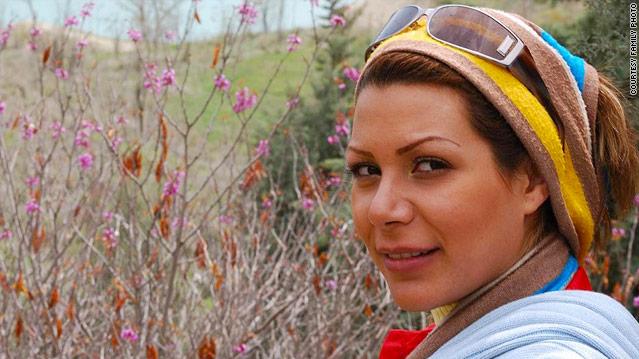
“I just hope that one day everyone will be free, and God willing, Neda will also have achieved her goal,” Hajar Rostami Motlagh, the mother of the late Neda Agha Soltan (pictured) told the International Campaign for Human Rights in Iran.
Describing her expectations for justice, Hajar Rostami Motlagh, Neda Agha Soltan’s mother said, “I expected a court trial to be held for my daughter’s murder, and it hasn’t happened. I don’t know if I will ever hear an answer in my lifetime!”
Neda’s mother expressed her wishes for the future, saying, “I don’t know what to say. I just hope that one day everyone will be free, and God willing, Neda will also have achieved her goal. I can’t say anything else. Answering these questions is hard for me,” Hajar Rostami Motlagh said.
Asked whether they were able to easily hold Neda’s anniversary memorial this year, Hajar Rostami said, “Yes, thank God. It was very safe and easy. People attended also. We were going back home and there was yet another group of Neda’s fans coming to her grave site.”
Neda Agha Soltan, born on January 23, 1983, was fatally shot during a protest against the results of the 2009 presidential election on Saturday, June 20, 2009, in Tehran’s Amirabad neighborhood at the intersection of Khosravi and Salehi Streets. So far, it is not clear who shot and killed her, and no one has taken responsibility for her death. During the months following her death, the state radio and television and some Iranian authorities offered different versions of her death on several occasions. Over the past four years, the police and security forces have restricted or shown violence to those who visit her gravesite to conduct observance ceremonies for her.
In August 2011, just before the UN Special Rapporteur on human rights in Iran presented his first report to the UN, the International Campaign for Human Rights in Iran conducted an interview with Hajar Rostami. “Two years, three months, and two days after my daughter’s death, all I want is to first ask Mr. Ahmadinejad why we should have such lack of security in our country for some to come, kill, and go, without any particular consequences. When, speaking with one of the most reputable media outlets in the world, Mr. Ahmadinejad says that Neda was murdered by BBC operatives, he must have documents and evidence for his statements. Therefore I want him to introduce those behind my daughter’s death,” said Hajar Rostami, pointing out her daughter’s futile murder investigation.
Iran News ( Iraqi al-Qaeda leader has travelled to Turkey to purchase chemical weapons ) Lets see the proof ?
Report: Iraqi Al-Qaeda Leader in Turkey to Buy Weapons, Chemical Substances

TEHRAN (FNA)- Iraqi al-Qaeda leader Abu Bakr al-Baghdadi has travelled to Turkey to purchase weapons and chemical substances to start a new phase in war on the Baghdad government, media reports said.
Al-Baghdadi is in Turkey to buy weapons and chemical substances to be used in al-Qaeda operations against Iraq's army, al-Mayadeen TV quoted an informed source as saying on Tuesday.
Iraq’s al-Qaeda has recently increased its terrorist activities in the Muslim country concurrent with a rise in al-Qaeda attacks in Syria.
Earlier this month, the Iraqi defense ministry announced that it had broken up an al-Qaeda cell that was working to produce poison gas at two locations in the capital for future attacks at home and abroad.
The group of five people built two facilities to produce sarin and mustard gas, using instructions from another Al-Qaeda group, Iraqi Defense Ministry Spokesman Mohammed al-Askari told a news conference.
Earlier this year, Iraq's anti-terror squads identified and destroyed the biggest base of the terrorist Al-Qaeda organization located in Babel province.
COLOMBIA ( Arrests made in the killing of DEA Special Agent Terry Watson )
COLOMBIA: Arrests Made in Killing of DEA Agent
 Tuesday, June 25, 2013 |
Tuesday, June 25, 2013 |
BorderlandBeat.Com


Sources: DEA Press Releases

JUNE 25 - (Washington, D.C.) --
The U.S. Drug Enforcement Administration’s statement regarding the arrest of four individuals in connection with the murder of Special Agent Terry Watson in Bogota, Colombia:

“The Drug Enforcement Administration is grateful for the outstanding work of the Colombian National Police, the Special Investigative Unit and the Attorney General’s Office that led to the swift arrest of these suspects,” said DEA Administrator Michele M. Leonhart.
“We will never forget Special Agent Watson and his sacrifice, as well as all those who have given their lives for the rule of law. We salute the brave and expeditious work of Colombian law enforcement and we look forward to justice being served.”
The body of slain U.S. Drug Enforcement Administration Agent James “Terry” Watson was returned to his Louisiana home following his stabbing last week in Colombia during an aborted robbery attempt. He will be buried tomorrow.

The following was the press release from the DEA at the time of agent Watson’s murder
DEA Announces Tragic Loss of Special Agent in Colombia
JUNE 21 (WASHINGTON) - The United States Drug Enforcement Administration (DEA) today announced the tragic loss of Special Agent James “Terry” Watson, who was murdered in what appears to have been a robbery attempt last night in Bogota, Colombia.
At the time of his death, Special Agent Watson was assigned to the DEA Cartagena, Colombia office and was on temporary duty in Bogota. Colombian and U.S. authorities are currently investigating. No further details are available at this time.
“We are all saddened by this devastating loss of a member of the DEA family,”said DEA Administrator Michele M. Leonhart. “Terry was a brave and talented DEA Special Agent who served our agency for 13 years. These are the worst days for anyone in law enforcement and we grieve Terry’s loss. Our thoughts and prayers are with Terry’s wife and family, and we will forever carry his memory in our hearts.”
“We are all saddened by this devastating loss of a member of the DEA family,”said DEA Administrator Michele M. Leonhart. “Terry was a brave and talented DEA Special Agent who served our agency for 13 years. These are the worst days for anyone in law enforcement and we grieve Terry’s loss. Our thoughts and prayers are with Terry’s wife and family, and we will forever carry his memory in our hearts.”
In addition to serving in Colombia, Special Agent Watson has served in Honolulu, Hawaii and San Juan, Puerto Rico. He also served on three deployments to Afghanistan conducting dangerous counter-narcotics missions as a member of DEA’s FAST program. Prior to his DEA service, Special Agent Watson worked for the U.S. Marshals Service and served in the United States Army.
Subscribe to:
Posts (Atom)