P4Z-0hy22ZRyqh5IUeLwjcY3L_M

P4Z-0hy22ZRyqh5IUeLwjcY3L_M
MEAN STREETS MEDIA

Thursday, October 30, 2014

Police rides down protesters in Malmö, Sweden (Graphic content!)

Sunni prisoner beaten severely at Ghezel Hesar Prison in Karaj

Posted on: 30th October, 2014

  • Rate The News
  • Rate this post

  • Random News
  • Editor: Human
  • Translator:
  • Source: SUNNI PRISONERS IRAN
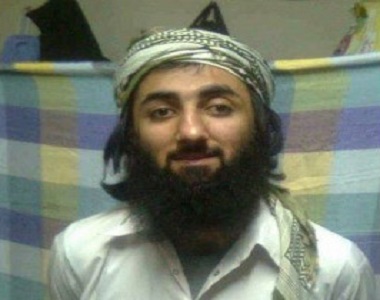
Seddigh Mohammadi
HRANA News Agency – The family of Seddigh Mohammadi, a Sunni prisoner suffering from psychological illnesses awaiting execution in Iran, say they found bruising and evidence of beating on his body during a recent visit to the prison.
According to the report of Human Rights Activists News Agency (HRANA), the family had finally been allowed to visit Seddigh Mohammadi in Ghezel Hesar prison last week, after a year of being prohibited from visiting the prison.
During the visit, during which Seddigh was separated from the family behind glass, the family noticed that Seddigh’s legs were bruised and one of his teeth had been broken.
The family also said that Seddigh Mohammadi had been forced to remain in solitary confinement for 40 days without reason.
The family complained about his injuries and suspected beatings to the Head of Unit 2 of the prison, Hossein Ghadami, as well as the Head of Security, Iraj Haghighi. However, following threats from Prison Security towards Seddigh Mohammadi, the family was forced to withdraw their complaints.
Seddigh Mohammadi was previously beaten by prison guards before being transferred to solitary confinement on 12 August 2014, after he complained about prison guards who had insulted his Sunni religious beliefs. The attack in August left him with severe bruising to his body and a wound to his head.
Seddigh Mohammadi, originally from Javanroud in the Kermanshah province of Iran, was arrested in June 2010, before being sentenced to death after being convicted of Moharabeh ‘enmity against God’.
The Supreme Court originally overturned his death sentence, along with that of another Sunni prisoner, Hadi Hosseini, in December 2013 due to their psychological illnesses. The move came after the men ended a 7-week long hunger strike, with officials promising to provide a retrial in the Revolutionary Court in Sanandaj.
However, the men did not receive retrials as promised, and in May 2014 the Supreme Court confirmed their death sentences once again. Their cases were sent to the Office for the Implementation of Sentences, and the men are at risk of execution.

ISIS kills 220 from opposing Iraqi tribe

Islamic State of Iraq and Syria (ISIS) militants executed at least 220 Iraqis in retaliation against a tribe’s opposition to their takeover of territory west of Baghdad, security sources and witnesses said.
Two mass graves were discovered on Thursday containing some of the 300 members of the Sunni Muslim Albu Nimr tribe that ISIS had seized this week. The captives, men aged between 18 and 55, had been shot at close range, witnesses said.
The bodies of more than 70 Albu Nimr men were dumped near the town of Hit in the Sunni heartland Anbar province, according to witnesses who said most of the victims were members of the police or an anti-ISIS militia called Sahwa (Awakening).
“Early this morning we found those corpses and we were told by some ISIS militants that ‘those people are from Sahwa, who fought your brothers the ISIS, and this is the punishment of anybody fighting ISIS’,” a witness said.
The insurgents had ordered men from the tribe to leave their villages and go to Hit, 130 km (80 miles) west of Baghdad, promising them “safe passage”, tribal leaders said. They were then seized and shot.
A mass grave near the city of Ramadi, also in Anbar province, contained 150 members of the same tribe, security officials said.
The Awakening militia were established with the encouragement of the United States to fight al Qaeda during the U.S. “surge” offensive of 2006-2007.
Washington, which no longer has ground forces in Iraq but is providing air support for Iraqi forces, hopes the government can rebuild the shaky alliance with Sunni tribes, particularly in Anbar which is now mostly under the control of ISIS, a group that follows an ultra-hardline version of Sunni Islam.
But Sunni tribal leaders complain that Shi’ite Prime Minister Haider al-Abadi has failed to deliver on promises of weapons to counter ISIS’s machineguns, sniper rifles, rocket-propelled grenades and tanks.
Sheikh Naeem al-Ga’oud, one of the leaders of the Albu Nimir tribe, said: “The Americans are all talk and no action.”
ISIS was on the march in Anbar this year even before it seized much of northern Iraq in June. As the 
government and fighters from the autonomous Kurdish region have begun to recapture territory in the north, ISIS has pressed its advances in Anbar, coming ever closer to Baghdad.

Gas project workers protest to demand 4 months of back wages


Printer-friendly versionPrinter-friendly version
One hundred workers at the Phase 17 and 18 Southern Pars Oil and Gas projects stopped work on Wednesday October 29 to protest for the payment of four months worth of overdue wages.
ILNA reports that the workers have not been paid wages and benefits since July, and the protesters stopped work with prior warning to the employer to demand the immediate payment of their overdue wages.
The report indicates that the 100 protesters in fact represent 2,000 workers employed through 10 contracting companies to work on the same project.
Workers indicate that throughout the four-month delay in the payment of their wages, they have continued to labour on the project, even in the punishing heat of 60 degrees Celsius.
The report indicates that the workers’ wages range anywhere from 800 thousand toumans to six million toumans.

Wednesday, October 29, 2014

Rocket explosion see ( Video ) wow !

Iraq ( IS militants execute 30 Iraqi tribal fighters, soldiers )

killed by is.jpg
BAGHDAD: Islamic State group militants lined up 30 men in western Iraq and shot them dead Wednesday, an official and residents said, the latest mass killing carried out by the group since its advance across the country.
The slayings, on a main street in the Al-Bakir district in the town of Hit, targeted Sunnis tribal fighters allied with the government and members of the security forces that the extremists captured when they overran the town, the official and the residents said.
The militants first paraded the men through town, shouting through loudspeakers that the captured men were apostates who fought against them, residents said. The extremists then lined up the men and shot them dead with assault rifles, residents said.
A photograph obtained by The Associated Press showed a line of the men’s bodies by a small pool of blood as onlookers walked by.
Anbar provincial council chairman Sabah Karhout said those killed were captured when the Islamic State group overran the town, located about 140 kilometers (85 miles) west of Baghdad, earlier this month.
Karhout called the slayings “a crime against humanity” and demanded more international support for the Sunni tribes fighting the militants in Anbar.
Iraq is in its worst crisis since the 2011 withdrawal of US troops as Sunni militant groups led by the Al-Qaeda breakaway Islamic State group have seized a third of the country. In one lightning offensive over the summer, Iraq’s US-trained army and security forces melted away as the extremists advanced and captured key cities and towns in country’s north.
In Iraq and along with areas in eastern Syria, the militants have declared a self-styled caliphate and imposed their own harsh interpretation of Shariah law. They also have targeted the country’s religious minorities, including Christians and others, killing hundreds and forcing hundreds of thousands to leave their homes.
A US-led coalition is now targeting Islamic State extremists with airstrikes. US Central Command said the coalition launched six airstrikes in Iraq over Tuesday and Wednesday using jet fighters and drones, hitting targets near Fallujah and Sinjar.
In other violence Wednesday, police said a roadside bomb exploded near an army patrol in a town just south of Baghdad, killing three soldiers and wounding seven. A later bomb blast on a commercial street in Baghdad’s eastern district of Ur killed two people and wounded eight, police said.
Medical officials confirmed the casualties. All officials spoke on condition of anonymity because they were not authorized to speak to journalists, while the residents of Hit requested their names not be used out of fears of reprisal.

Mexican Experts Seeking Bodies of 43 Students in Trash Dump


COCULA, Mexico – Experts with the Mexican Attorney General’s Office are scouring an area near the town of Cocula for the bodies of the 43 students who disappeared Sept. 26 near the nearby city of Iguala, journalists managed to learn on Tuesday.

The officials from the so-called PGR started working on Tuesday at the dump located in a hard-to-access zone about 10 km. (6 mi.) from Cocula and half an hour from Iguala, which is in the southern state of Guerrero.

The dump covers some 40 square meters (430 sq. feet), half of which shows signs of having been burned.

A dozen forensic experts have cordoned off the area and placed little orange flags at certain spots in the dump, presumably to designate places to dig.

The AG’s office came to the site after four members of the Guerreros Unidos drug cartel said they had participated in the students’ disappearance.

The area is being heavily guarded by security forces and is being searched using trained sniffer dogs.

Mexican AG Jesus Murillo said Monday that the experts are seeking evidence that will corroborate the statements of the arrested cartel members that the site figured in the students’ disappearance.

He said that two of the men arrested Tuesday by federal agents said that the local police handed over the students to them and the other two admitted having been lookouts for the criminal group on the night of the disappearances.

Murillo said last week at a press conference that Iguala Mayor Jose Luis Abarca ordered police to attack the students to prevent them from disrupting an event that night at which his wife, head of the local family services office, was to give a speech.

Six people – three of them students – were killed and 25 wounded in the police attack on buses transporting the young people, but 43 others were captured by police and – evidently – later turned over to a local drug gang who were told they were members of Los Rojos, a rival criminal group.